How to Choose an Oxygen Concentrator for Home Use: A Practical Buyer’s Guide
Shopping for an oxygen concentrator for the first time usually starts with a lot of unfamiliar terms thrown at once: flow rate, concentration percentage, continuous versus pulse dose, PSA technology. It’s easy to feel like you need a clinical background just to compare two products side by side.
This guide breaks down what actually matters when evaluating an oxygen concentrator, what the specifications on a product page actually mean in practical terms, and how to think through whether a home unit or a portable oxygen concentrator fits your situation better.
Looking for the right unit for your needs? Browse oxygen concentrators at Altivox Health Store or call +971 56 462 3659.
What an Oxygen Concentrator Actually Does
An oxygen concentrator works by drawing in ordinary room air, which is roughly 21% oxygen, and using a filtration process to increase that concentration before delivering it through a nasal tube or mask. Most home and portable units use Pressure Swing Adsorption (PSA) technology, a method that separates oxygen from nitrogen and other gases in the air using a specialized filtering material called a molecular sieve.
This is fundamentally different from an oxygen tank, which stores a fixed, finite supply of compressed oxygen. A concentrator generates oxygen continuously from the surrounding air, which means no tanks to refill or replace, as long as the unit has a power source.
Continuous Flow vs. Pulse Dose: Why the Distinction Matters
One of the first specifications worth understanding is how the device actually delivers oxygen, since this affects both performance and who the unit tends to suit best.
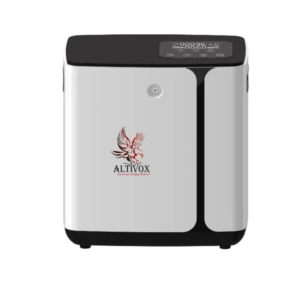
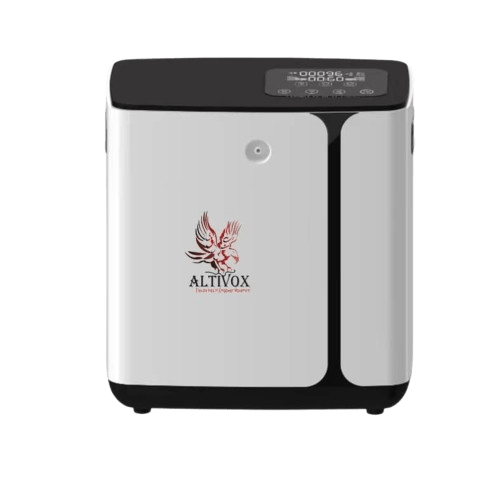
Continuous flow delivers a steady stream of oxygen at a set rate, measured in litres per minute, regardless of whether the person is inhaling or exhaling. Home units, like the Altivox Alt010, typically use this delivery method, with an adjustable flow rate; in the Alt010’s case, ranging from 1 to 9 L/min; that can be set based on individual needs.
Pulse dose delivery, more common in compact portable units, senses inhalation and releases a burst of oxygen only during that breath, conserving power and making units lighter and better suited to travel. Both delivery types have their place, and the right one depends heavily on how and where the unit will actually be used.
Key Specifications Worth Comparing
When comparing units, a few specifications tend to matter more than flashy marketing language:
- Oxygen concentration range. Look for the adjustable percentage range a unit can output; many home concentrators, including the Alt010, offer a 30% to 93% adjustable concentration, giving flexibility depending on the setting required.
- Flow rate range. Measured in litres per minute, this determines how much oxygen-enriched air is delivered per minute at a given setting.
- Noise level. Measured in decibels, this matters significantly for units running for extended periods, particularly overnight. A unit operating around 36 dB is notably quieter than typical background conversation.
- Power consumption. Lower wattage units cost less to run continuously and generate less heat, which matters for units expected to run for many hours a day.
- Weight and dimensions. This matters most for portable oxygen concentrator options intended for travel or frequent movement between rooms, where a lighter, more compact unit makes a real practical difference.
- Digital display and controls. A clear digital readout showing concentration, flow rate, and running time makes day-to-day monitoring considerably easier than a unit with only basic analog dials.
Home Units vs. Portable Oxygen Concentrator Options
Choosing between a home unit and a portable oxygen concentrator largely comes down to lifestyle and where oxygen enrichment is needed most.
Home units are generally larger, offer higher continuous flow rates, and are designed to stay in one location; a bedroom, a living area; running for extended periods without needing to be moved. The Alt010, for example, weighs 4.2 kg with dimensions of 240 × 150 × 255 mm, making it compact enough for a home setting without being designed for regular transport.
Portable units prioritize lighter weight and battery operation, trading some flow capacity for the ability to move between rooms or travel outside the home. For anyone who splits time between locations or wants flexibility beyond a single fixed setup, a portable oxygen concentrator is generally the more practical choice, even if it means a narrower flow rate range compared to a full-sized home unit.
Who Actually Uses Oxygen Concentrators
Oxygen concentrators serve a range of purposes, and it’s worth being clear about what they’re generally used for. Beyond medically prescribed oxygen therapy, which should always be guided by a physician’s assessment and typically involves monitoring blood oxygen saturation, general home oxygen enrichment units are also used for wellness-focused purposes; supporting relaxation and recovery sessions, complementing certain wellness or spa-style treatments, and general air enrichment in a home environment.
If a concentrator is being considered for a diagnosed respiratory condition, sleep-related breathing issue, or any medically indicated need for supplemental oxygen, that decision should be made in consultation with a physician, who can assess appropriate flow rate and concentration based on actual blood oxygen levels rather than general product specifications alone.
What to Ask Before Buying
A few practical questions are worth asking any supplier before purchasing:
- What’s the adjustable concentration and flow rate range, and does it match what’s actually needed?
- How loud is the unit during continuous operation, particularly relevant for nighttime use?
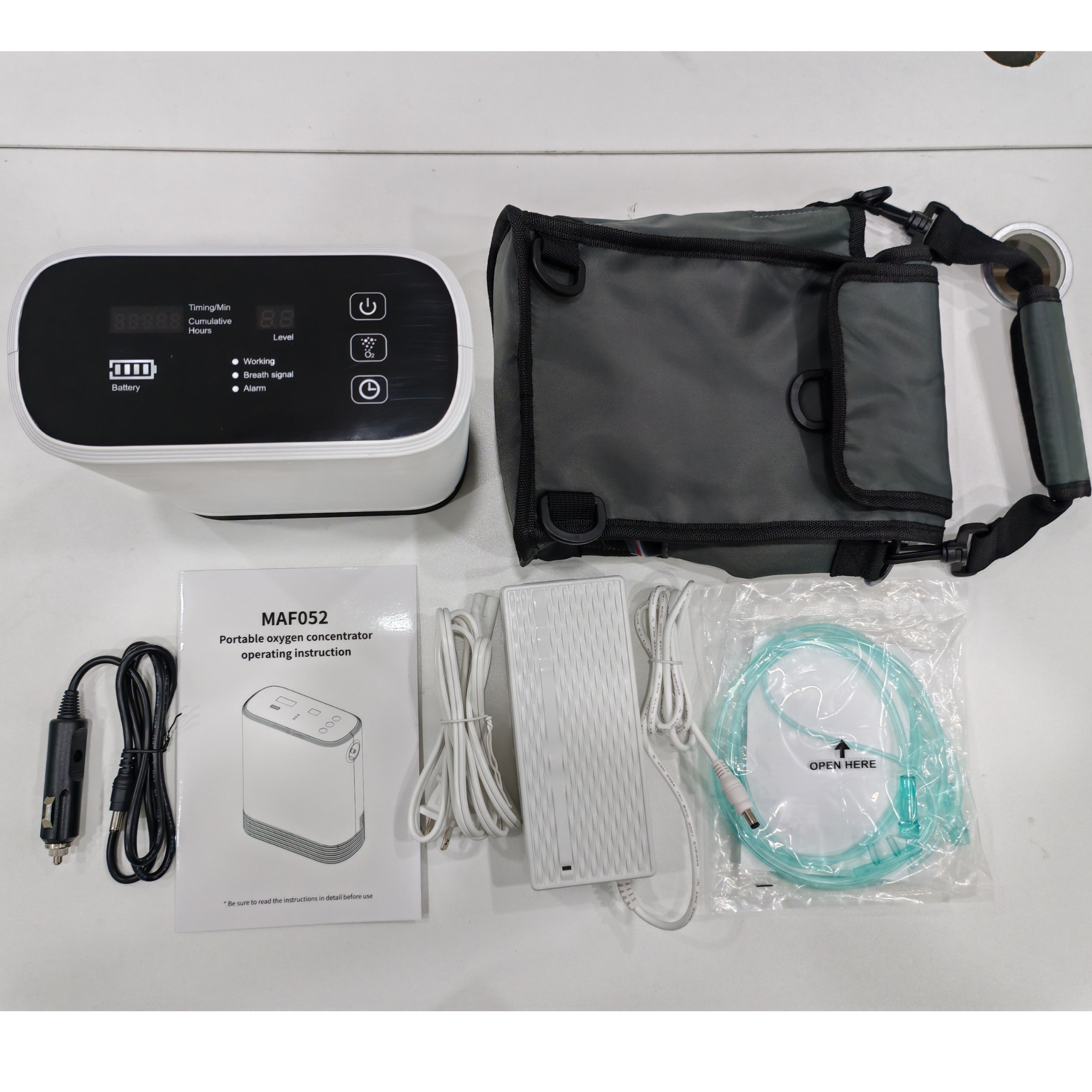
- What’s included in the box; tubing, carry case, instruction manual; and what needs to be purchased separately?
- Is there a warranty, and what does it cover?
- Does the supplier offer support if the unit needs servicing down the line?
Why Choosing the Best Oxygen Concentrator Comes Down to Fit, Not Just Specs
The idea of a single best oxygen concentrator across the board is a bit misleading, since the right unit depends entirely on how it will be used. A unit built for continuous home use with a wide flow rate range isn’t necessarily the better choice for someone who needs a lightweight, travel-friendly option, and vice versa. The more useful approach is matching the specifications; flow rate, portability, noise level; to your actual daily routine rather than chasing the highest number on a spec sheet.
Why Altivox Health Store’s Range Matters for UAE Buyers
As an established Oxygen Concentrator Supplier Dubai households and wellness providers turn to, Altivox Health Store carries multiple oxygen concentrator options spanning home continuous-flow units like the Alt010 through portable models such as the Alt01 and Alt052, giving buyers a genuine range to compare rather than a single one-size-fits-all product. Every unit lists full technical specifications upfront, including concentration range, flow rate, noise level, and power consumption, so buyers can compare units directly rather than relying on vague marketing descriptions.
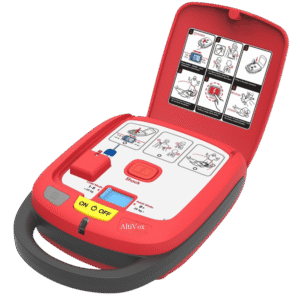
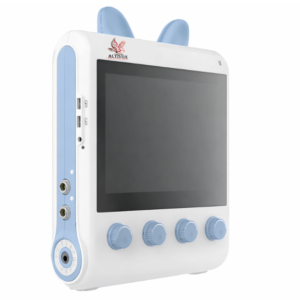
Altivox Health Store also stocks a broader range of biomedical and emergency equipment alongside its oxygen concentrator lineup, which matters for buyers who may need related monitoring equipment, like a patient monitor, as part of a broader home health setup.
Frequently Asked Questions
What does “PSA technology” actually mean in an oxygen concentrator?
PSA stands for Pressure Swing Adsorption, a filtration method that separates oxygen from nitrogen and other gases in ordinary air using a molecular sieve material, delivering a continuous supply of oxygen-enriched air without needing refillable tanks.
How do I know what flow rate setting is right for me?
This depends entirely on individual need. For medically indicated use, flow rate should be determined by a physician based on blood oxygen monitoring, not selected independently based on general comfort or guesswork.
Is a portable oxygen concentrator as powerful as a home unit?
Generally, portable units offer a narrower flow rate range than larger home units, trading some output capacity for lighter weight and battery-powered mobility, which suits travel and movement between locations better than fixed home use.
How loud are home oxygen concentrators during operation?
This varies by model, but well-designed home units can operate as quietly as 36 dB, which is significantly quieter than normal conversation, making overnight use less disruptive.
What’s included when purchasing a unit from Altivox Health Store?
Standard inclusions typically cover the unit itself, an oxygen suction tube, a power cord, an instruction manual, and a carry bag, though it’s worth confirming exact contents for the specific model being purchased.
Do I need a prescription to buy an oxygen concentrator in the UAE?
Requirements can vary by intended use and supplier. For any medically indicated respiratory need, consulting a physician first ensures the unit and settings genuinely match your health requirements rather than relying on self-assessment alone.
Find the Right Unit for Your Needs
Choosing between home and portable oxygen concentrator options comes down to matching real specifications, flow rate, concentration range, noise level, and portability, to how the unit will actually be used day to day. Altivox Health Store carries a range of options with full technical specifications listed upfront, backed by free delivery across Dubai.
Get in touch:
Call 📞 +971 56 462 3659, +971 50 685 0674
Mail 📧 info@altivoxhealthstore.com