Choosing the Right Wheelchair: A Practical Guide for Daily Use
Picking a wheelchair isn’t like picking most other pieces of equipment — get the wrong one, and it doesn’t just underperform, it actively makes daily life harder for the person using it. Whether you’re weighing up an electric wheelchair for a parent with limited upper body strength or a manual wheelchair with footrest for short-term recovery after surgery, the decision comes down to a handful of practical factors that matter far more than brand or price alone.
Speak to Our Team About Availability →
Manual or Electric: The First Real Decision
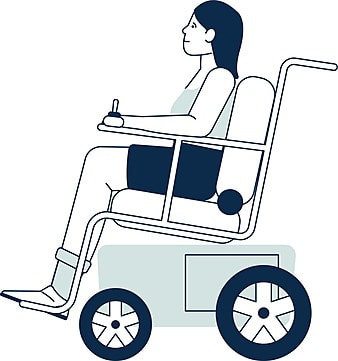
This is the fork in the road every buyer eventually hits, and it depends less on preference than on the user’s actual physical capability. A manual wheelchair requires either the user or a caregiver to provide propulsion, which demands a reasonable degree of upper body strength and stamina if it’s being self-propelled regularly. An electric wheelchair removes that requirement entirely, using a battery-powered motor controlled by a joystick or similar interface — the right call for users with limited arm strength, endurance issues, or conditions that make manual propulsion impractical over any real distance.
Cost and maintenance complexity scale with this choice too. Manual chairs are simpler mechanically, cheaper to maintain, and don’t depend on battery charging schedules. Electric chairs add genuine independence for many users but come with more moving parts, a battery to manage, and typically a higher upfront cost.
Why the Footrest Matters More Than It Sounds
A manual wheelchair with footrest isn’t just a comfort feature — for many users, it’s a genuine safety and positioning requirement. Proper footrests keep the legs supported at the correct height and angle, which affects circulation, posture, and pressure distribution across the seat over long periods of sitting. Swing-away or removable footrests also make transfers in and out of the chair considerably easier, since they can be moved out of the way rather than blocking the direct approach to the seat.
For anyone recovering from a lower-limb injury or surgery specifically, elevating or adjustable footrests can matter even more, since they allow the leg to be positioned to reduce swelling rather than left to hang at a fixed angle for hours at a time.
Foldable Power Chairs: Solving the Transport Problem
One of the most common frustrations with electric wheelchairs historically has been transport — a heavy, rigid frame doesn’t fit easily into a standard car trunk. A foldable power wheelchair addresses this directly, collapsing down for transport in a vehicle without requiring a specialised wheelchair-accessible vehicle or ramp system. This matters enormously for families managing regular hospital visits, errands, or social outings, where the alternative — an unfoldable chair — can mean needing a larger vehicle or professional transport service just to get from one appointment to the next.
The trade-off worth understanding: folding mechanisms add complexity and, in some models, slightly reduce structural rigidity compared to a fixed-frame chair. For most daily users this isn’t a meaningful downside, but it’s worth checking build quality and weight capacity specifically on a folding model rather than assuming it matches its non-folding equivalent.
What “Lightweight” Actually Means for Daily Use
A lightweight wheelchair for daily use isn’t a marketing term without substance — chair weight genuinely affects how manageable a wheelchair is for both the user and any caregiver assisting with transfers, loading into vehicles, or navigating tight indoor spaces. A lighter frame also tends to be easier to self-propel for manual wheelchair users, since less of their effort goes into moving the chair’s own weight before any forward motion happens.
That said, “lightweight” shouldn’t come at the cost of stability or weight capacity for the specific user. A frame built light enough for easy transport but rated for a lower body weight than the user actually needs isn’t actually the right choice — matching weight capacity to the user is a non-negotiable safety requirement, not a spec to compromise on for convenience.
Sizing: The Detail Most People Get Wrong
Seat width, depth, and height all need to match the individual user, not just their general size category. A seat that’s too wide forces awkward posture and reduces propulsion efficiency for manual users; one that’s too narrow creates pressure points and discomfort over extended sitting periods. Getting a proper measurement — ideally from a physiotherapist or occupational therapist familiar with wheelchair fitting — before purchasing matters more than most other decisions in the buying process, since an ill-fitting chair can cause real physical problems even if every other spec is right.
Questions Worth Asking Before You Buy
A few direct questions clarify most of the decision-making process:
- How much of the day will the chair actually be used? Occasional use has different priorities than a chair someone will spend eight or more hours a day in.
- Will the chair need to be transported regularly, and does the household vehicle accommodate a folding or non-folding model?
- Does the user have the upper body strength and stamina for self-propulsion, or is a power option genuinely necessary rather than just convenient?
- What’s the realistic weight capacity needed, factoring in the user’s weight plus any additional equipment or bags typically carried?
- Is ongoing maintenance support available locally, particularly for electric models where battery and motor servicing matters over the chair’s lifespan?
Maintenance Considerations Worth Planning For
Manual wheelchairs need relatively simple upkeep — regular tire pressure checks, keeping wheel bearings clean, and periodic inspection of brakes and footrest hardware. Electric and foldable power models add battery maintenance to that list, including proper charging habits and periodic battery health checks, since a degraded battery is one of the more common reasons power wheelchair users experience reduced range over time. Asking a supplier directly about local servicing and parts availability before purchasing avoids a situation where a chair breaks down with no straightforward repair path.
Why This Is Worth Getting Right the First Time
A wheelchair that doesn’t actually fit a user’s needs — wrong size, wrong propulsion type, missing the footrest configuration that supports proper positioning — tends to get used reluctantly or inconsistently, which defeats the entire purpose of the equipment. Taking the time upfront to match the chair type, size, and features to the actual person using it, rather than defaulting to whatever’s cheapest or most readily available, pays off in daily comfort and independence over the months and years the chair will actually be used.
Get in Touch
Altivox Health Store
Address: Deira, Dubai
Call: +971 56 462 3659 / +971 50 685 0674
Mail: info@altivoxhealthstore.com
Free Delivery in Dubai
As a UAE-based medical and rehabilitation equipment supplier, Altivox Health Store can be contacted directly to check current availability of mobility and wheelchair equipment, alongside the physiotherapy, rehabilitation, and biomedical equipment carried across the rest of the store.
Contact Altivox Health Store →
Frequently Asked Questions
How do I know if someone needs a manual or electric wheelchair?
This generally comes down to upper body strength, stamina, and how much distance the chair needs to cover daily. If self-propulsion over meaningful distances isn’t realistic or sustainable for the user, an electric option is usually the more practical long-term choice, ideally confirmed with a physiotherapist’s assessment.
Are foldable power wheelchairs less durable than fixed-frame models?
Not necessarily, but folding mechanisms do add mechanical complexity. It’s worth checking the specific weight capacity and build quality of a folding model rather than assuming it automatically matches a non-folding equivalent from the same category.
What weight capacity should I look for in a lightweight wheelchair?
The chair’s rated weight capacity needs to comfortably exceed the user’s actual body weight, accounting for any additional items typically carried. A lighter frame should never come at the cost of an inadequate weight rating for the specific user.
How often does a wheelchair footrest need adjustment?
This depends on the user’s condition and any changes in swelling, injury recovery, or seating needs over time. Adjustable and elevating footrests should be reassessed periodically, particularly during active recovery from a lower-limb injury or surgery.
Does a wheelchair need to be professionally fitted, or can it be bought off the shelf?
For occasional or short-term use, a well-sized standard model can work fine. For daily, long-term use, professional fitting — ideally involving a physiotherapist or occupational therapist — is strongly recommended, since incorrect sizing can cause real discomfort and posture problems over time.
How can I check what wheelchair equipment is currently available at Altivox Health Store?
The most reliable way is to contact the store directly by phone or email, since product availability can change — reaching out ahead of a visit confirms current stock before making the trip.