How an Automated External Defibrillator Works — and Where to Get One in Dubai
Cardiac emergencies strike without warning. When the heart suddenly stops beating normally, the window for effective intervention is alarmingly small — survival chances drop by roughly 10% with each passing minute. That is why having an AED machine on-site is no longer a luxury for hospitals alone. It is a life-saving necessity for schools, offices, malls, gyms, and any space where people gather. At Altivox Health Store, we understand the urgency of cardiac preparedness, which is why we bring certified, reliable defibrillator solutions to facilities across Dubai and the wider UAE.
What Is an Automated External Defibrillator?
An automated external defibrillator is a compact, portable medical device that detects abnormal heart rhythms and delivers a calibrated electric shock to restore the heart’s normal rhythm. Unlike traditional defibrillators used exclusively by trained paramedics, modern AEDs are engineered for ease of use by anyone — even someone with no medical background. They guide the user through each step with clear voice instructions, analyze the heart rhythm automatically, and only deliver a shock when the device determines it is clinically necessary. This built-in intelligence makes them both safe and highly effective in public-access scenarios.
How Does an AED Machine Actually Work?
Understanding the mechanics of an AED machine helps appreciate why it is so effective in emergencies. The process follows a straightforward sequence. Step 1 — Power On. The user switches on the device, which immediately begins providing audio and visual guidance.
Step 2 — Electrode Pad Placement. Adhesive electrode pads are placed on the patient’s bare chest as directed by the device. These pads serve a dual purpose: they read the heart’s electrical activity and deliver the shock if needed.
Step 3 — Heart Rhythm Analysis. The AED analyses the patient’s ECG in seconds — advanced models like the ALTAI DP1 complete this in just 8.5 seconds — and determines whether a shockable rhythm is present.
Step 4 — Shock Delivery. If the analysis confirms a shockable rhythm, the device charges and instructs the user to stand clear before delivering the shock. If no shockable rhythm is detected, the device simply advises continuing CPR.
Step 5 — Post-Shock Guidance. After the shock, the AED continues monitoring and guiding the user until professional medical help arrives.
This seamless, guided process is what makes the automated external defibrillator so powerful — it removes the guesswork from one of the most high-pressure situations imaginable.
Why Dubai Facilities Are Investing in AEDs
Dubai has been steadily advancing its public health infrastructure, and cardiac emergency preparedness is a significant part of that effort. Large venues including airports, shopping centers, and sports facilities are increasingly required to have life-saving equipment on the premises. This rising awareness has driven a surge in demand for a reliable AED supplier Dubai — one that provides certified, high-performance devices backed by proper after-sales support. Whether you manage a corporate office in Business Bay, a fitness center in JBR, or a school in Jumeirah, integrating a defibrillator into your emergency response plan is one of the most responsible decisions you can make for the people in your care.
What to Look for Before You Buy an AED in Dubai
Not all AEDs are created equal. When evaluating your options, consider these key factors.
Speed of analysis. The device should analyze the patient’s heart rhythm quickly so that a shock — if required — can be delivered without delay.
Dual-mode capability. A quality AED should support both adult and child shock settings (150J for adults, 50J for children), making it versatile across different emergency scenarios.
Battery longevity. Emergency equipment that fails at the critical moment is worse than useless. Opt for a device with a long shelf life — ideally up to four years — so your investment remains reliable over time.
Voice guidance and language support. Clear, localized voice instructions help bystanders respond confidently in high-stress moments.
Portability and weight. A unit weighing around 2.3 kg with a sturdy carry case ensures the device can be transported quickly to any location within a facility.
Data storage and connectivity. Advanced models store ECG data and audio records for up to 90 minutes and support Bluetooth transfer for post-incident review — a valuable feature for hospitals and emergency services.
Where to Buy AED in Dubai — Why Altivox Is the Right Choice
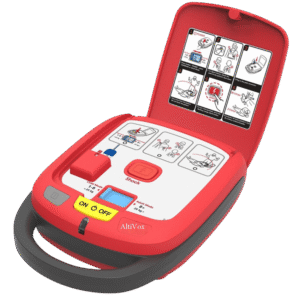
Choosing the right supplier matters just as much as choosing the right device. Altivox Health Store, based in Deira, Dubai, has established itself as a trusted name in the UAE medical equipment market. Our AED offering — the ALTAI DP1 — is a certified, feature-rich device currently available at a significantly reduced price, making professional-grade cardiac emergency equipment accessible to a wider range of buyers. Beyond the product itself, we provide a full standard configuration that includes the main unit, battery pack, pre-installed electrode pads, and a carry case. Optional accessories such as AED trainers, wall-mount cabinets, first aid kits, and PC software make it easy to build a complete emergency preparedness setup around a single purchase. With a two-year warranty and free delivery across the UAE, our offering is hard to match. Our inventory also extends to related biomedical and emergency equipment — patient monitors, ECG machines, and more — making us a one-stop destination for facilities looking to equip themselves comprehensively.
Where Should You Place an AED Machine Dubai?
Strategic placement is just as important as owning the device. Ideal locations include building entrances and reception areas, gym floors and sports courts, cafeterias and large meeting rooms, near elevators in multi-story buildings, and in dedicated first-aid stations. The goal is that no person in your facility should be more than a minute away from a device.
Frequently Asked Questions
Q: 1 Do I need medical training to use an automated external defibrillator?
No. Modern AEDs are specifically designed for use by untrained bystanders. The device provides step-by-step voice instructions and will only advise a shock if the heart rhythm analysis confirms it is necessary.
Q: 2 Is it legal for non-medical premises to keep an AED in Dubai?
Yes. Public access defibrillation is actively encouraged across the UAE, and placing an AED in offices, schools, and commercial spaces is considered a responsible and commendable safety measure.
Q: 3 How often do electrode pads and batteries need to be replaced?
For most quality devices, electrode pads last around three years and batteries up to four years under normal storage conditions. Always check expiry dates periodically.
Q: 4 Can a single AED be used for both adults and children?
Yes, provided the device supports dual-mode settings. The ALTAI DP1 delivers 150J for adults and 50J for children, covering both scenarios.
Q: 5 Where can I buy AED in Dubai with after-sales support?
We offer the ALTAI DP1 with a two-year warranty, free UAE delivery, and optional accessories.
Get in Touch with Us
📞 Phone: +971 56 462 3659
📧 Email: info@altivoxhealthstore.com